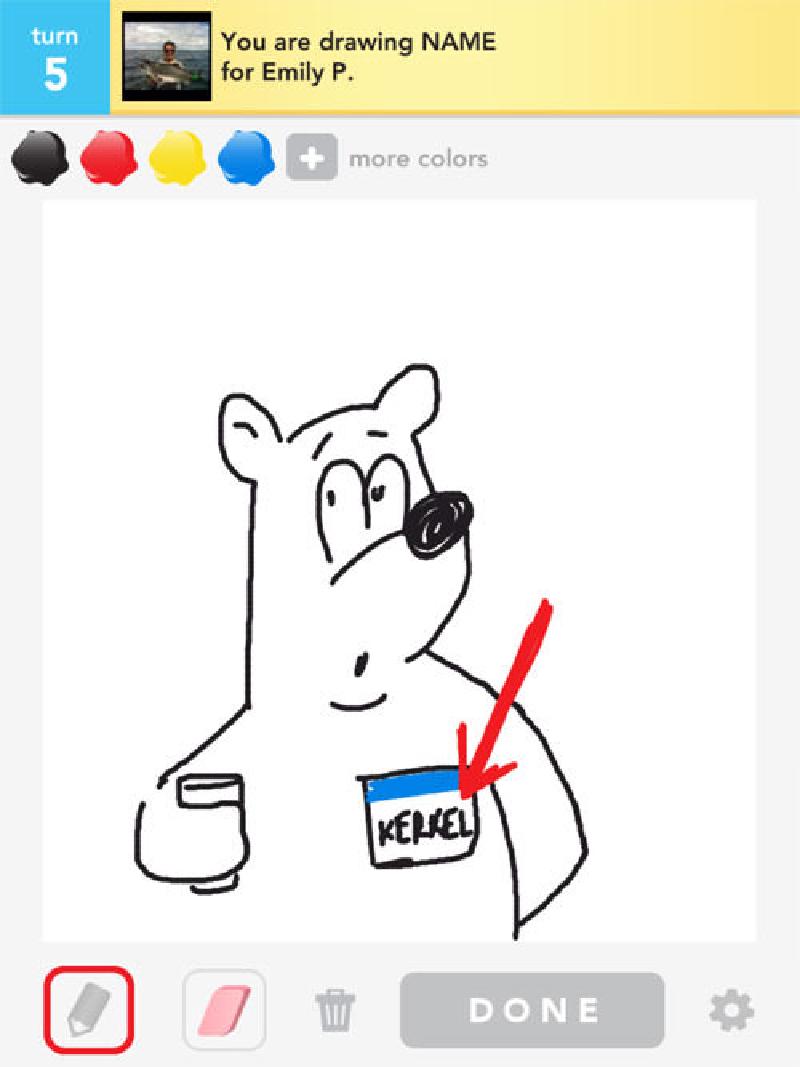
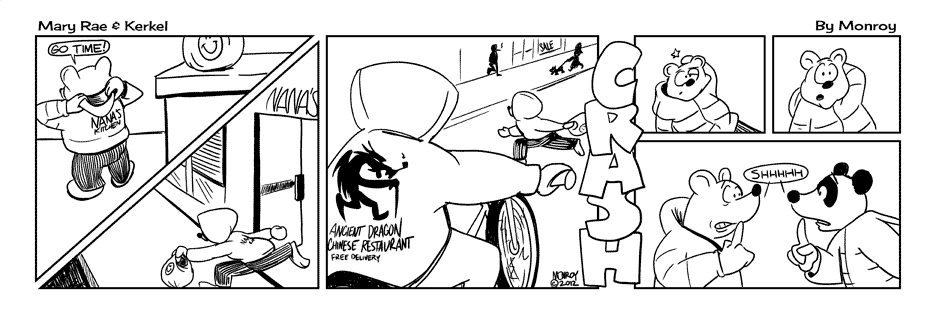
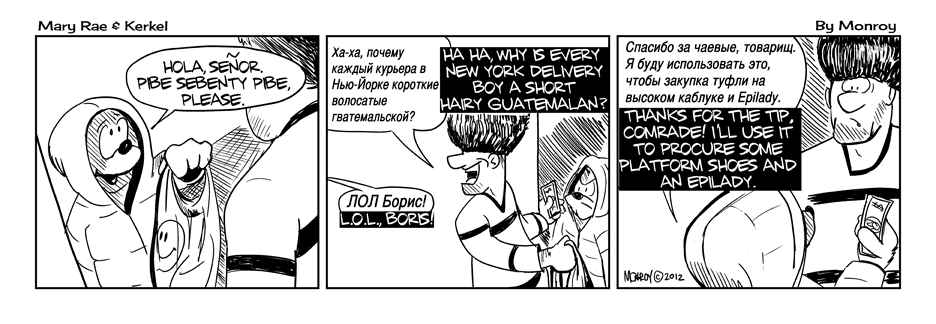
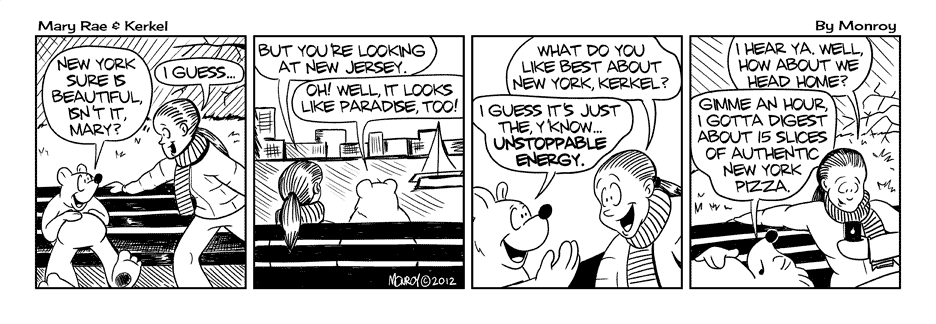
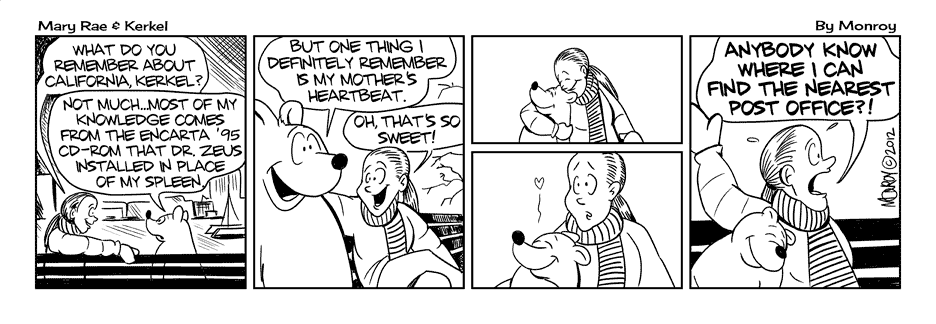
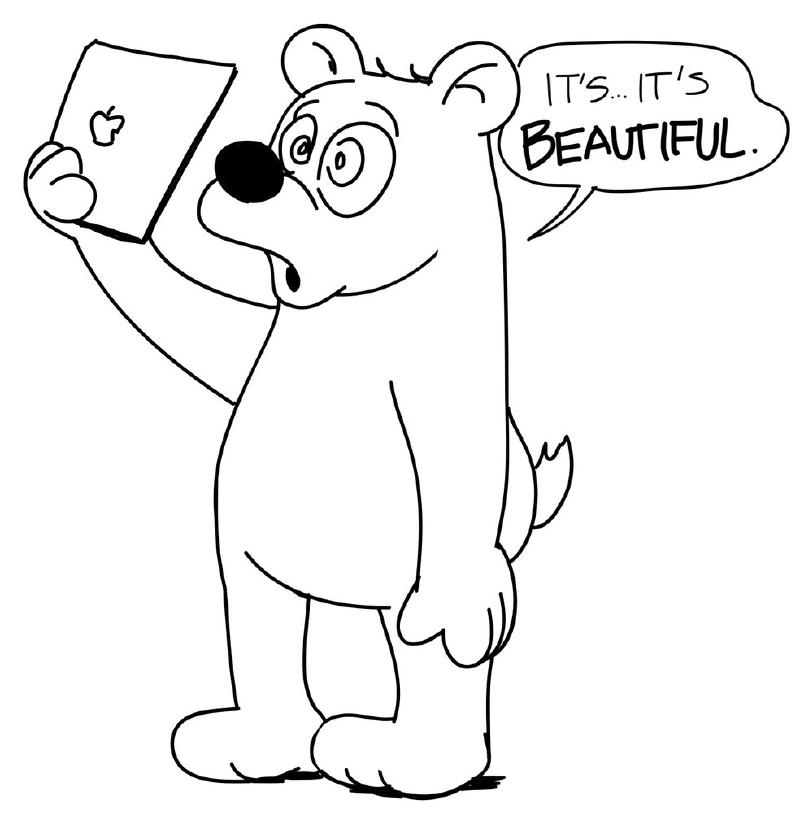
Drawn on my new iPad of course. It’s a marvelous content creation device (I’m even dictating this!), but I must admit that using it for drawing doesn’t make as much sense as I thought it did when I bought my original iPad about a year and a half ago.
Much like doodling on an Etch-a-Sketch, there’s a certain pleasure in overcoming the iPad’s inherent limitations to produce a competent drawing. All iPads thus far have been designed to register relatively imprecise input from your fat fingers. The basic workaround is to draw as zoomed-in as possible, but sometimes it can be tough to draw without seeing the entire picture at once. Your mileage may vary, but unfortunately for me, this rules out the iPad as a sketchbook for quick ideas or gesture sketches.
Incidentally, many of my drawing apps actually seem to be extra laggy on my otherwise zippy new toy, which I hope are just growing pains resulting from the awesome new display resolution.
Art-wise, I think where the iPad really shines is painting; you can’t beat the massive color pallete, and if you paint in large areas of color/tone and work your way into the details, you don’t necessarily have to do a lot of zooming until the very end.
I’m holding out hope for some sort of accessory or software that will tear me away from my real paper sketchbook, but so far Apple doesn’t seem very interested in latching onto my market segment. But all of my artsy e-books look great!
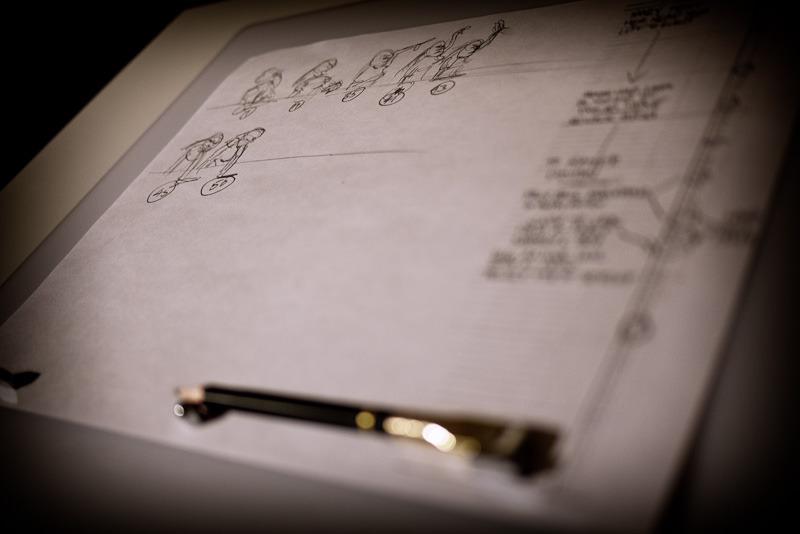
The usual coffee shop sketches. If they look a little sloppier than usual, it’s because I’m really trying to sketch without looking at the paper. It allows me to capture fleeting motion that would otherwise pass me by if I were to focus on drawing instead of on seeing.
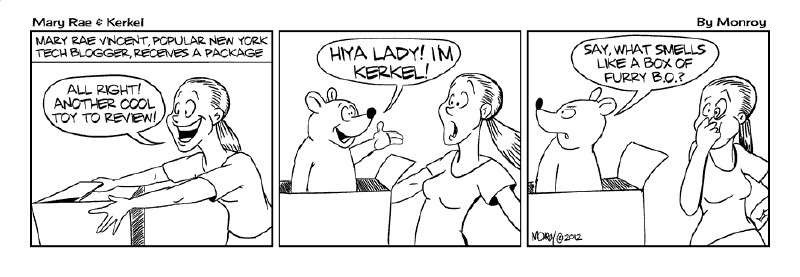
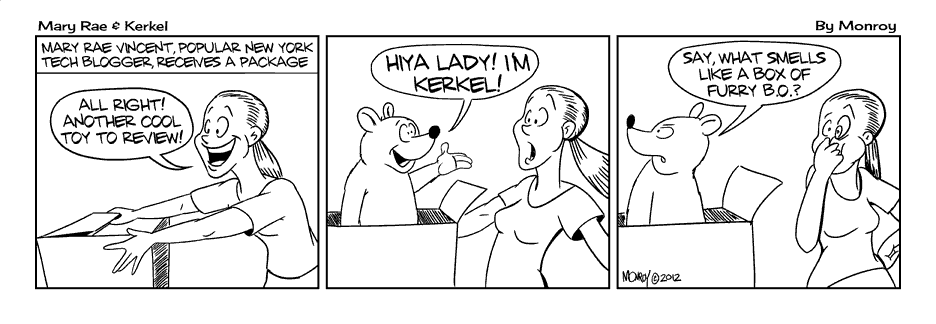
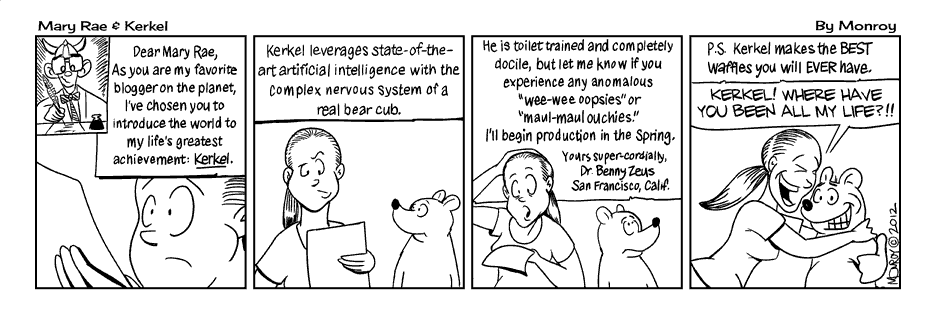
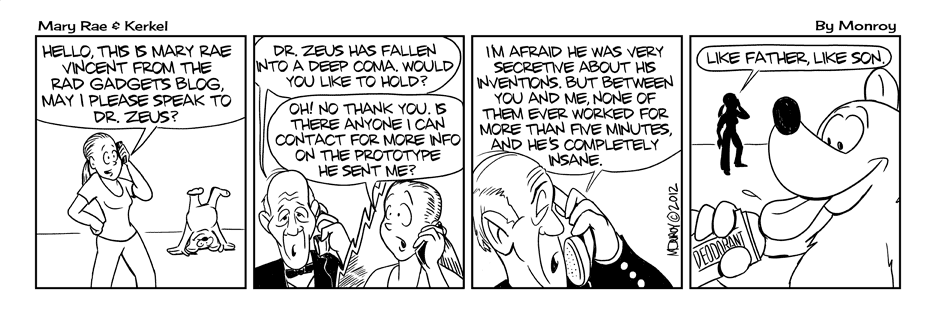
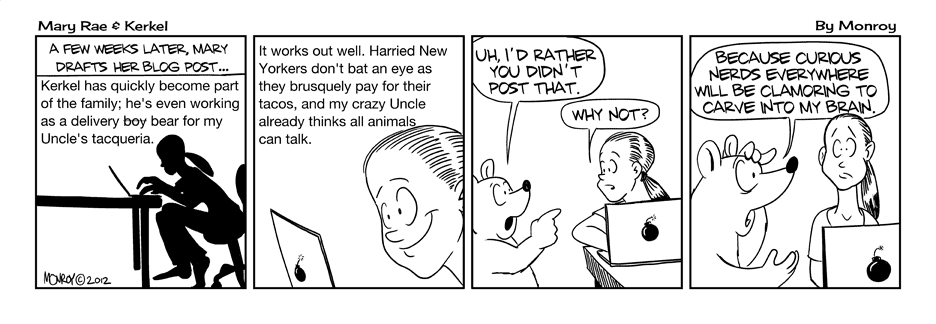
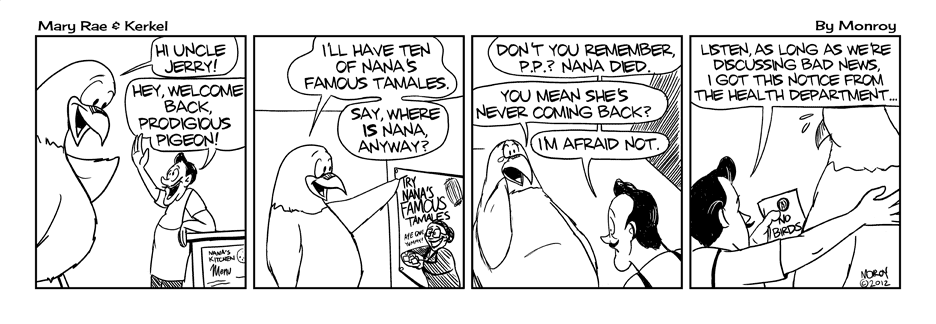
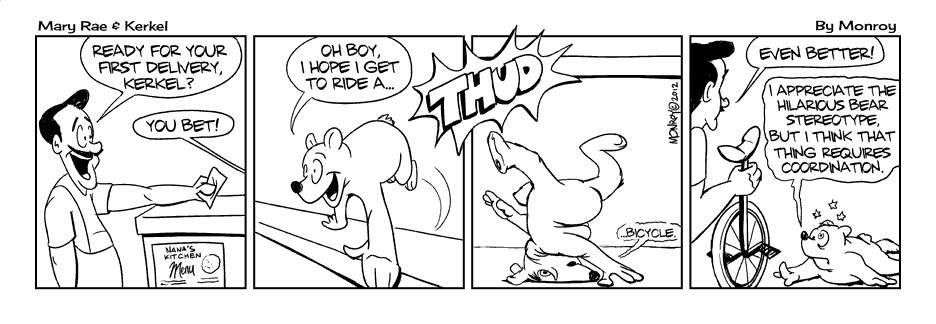
Must be Kerkel week. I thought I’d throw out a little reminder that the retarded protracted comic strip contest is STILL going on. Click here
I think this week’s episode is my favorite; every panel with Kerkel makes me laugh, and I drew the darn thing. (That probably means this is the week I’ll be eliminated.)
Going back to some basic animation concepts here; although I feel like I learned something from the 11-second animation contest, I also threw a lot of these basics out the window–I was in a hurry, and I was anxious to see my characters move.
This picture illustrates basic timing and spacing. If I wanted to have Kerkel angrily react to something by turning his head, and have the action take 16 frames from start to finish, I’d begin by drawing the two “extremes,” as indicated in black. Then I’d figure out where I wanted his head to be at the apex of the move, aka the “breakdown,” and draw that next, as indicated in red. Then I’d draw successive inbetweens, as indicated in blue.
The chart at the bottom, as well as the way I’ve arranged the drawings, indicates the “spacing”–how far the character has moved in that particular period of time. Most actions “ease” in and out, which is why the drawings at the beginning and end of the move are closer together, indicating that the move speeds up as it approaches the breakdown, then slows down.
Once I get comfortable with this concept, I can add some realism by using different spacing for different body parts. His ears could take a little longer to settle than his head, for instance.